Why Does the Moon Appear to Change Shape?
Have you ever looked up at the night sky and thought, “Wait… didn’t the Moon look different yesterday?” Don’t worry, the Moon isn’t actually changing shape like a cosmic cookie cutter. What you’re seeing are the phases of the Moon.
The Moon itself is always round. What changes is how much of its sunlit side we can see from Earth.
It’s All About the Sun
The Moon doesn’t produce its own light. Instead, it reflects light from the Sun. As the Moon travels around Earth, the positions of the Sun, Earth, and Moon constantly change.
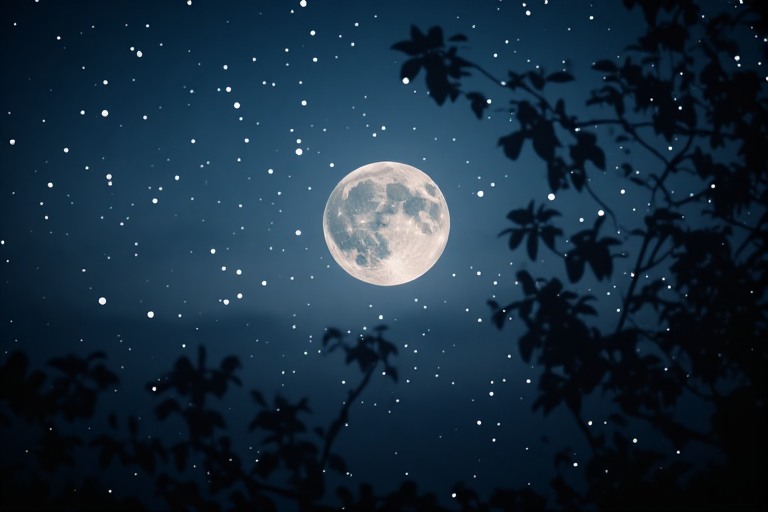
Sometimes we can see almost the entire illuminated side of the Moon. That’s a full moon. At other times, the Moon is positioned so that the bright side faces mostly away from us, creating a new moon, which is difficult or impossible to see from Earth.
The Moon’s Different Phases
Between these two stages, we get several familiar shapes, including the crescent, quarter, and gibbous phases.
Think of it like shining a flashlight on a ball while walking around it. The ball isn’t changing shape, but the part you can see illuminated changes depending on where you’re standing.
The Moon takes about 29.5 days to go through the complete cycle of phases as seen from Earth. During this time, it gradually appears to grow brighter, reach a full moon, and then shrink again until it becomes a new moon.
A Celestial Dance
And here’s a fun fact: the Moon isn’t actually getting smaller when we see a crescent. It’s just showing us less of its sunlit half. The Moon is still sitting up there, perfectly round and minding its own business.
So the next time you see a tiny crescent Moon, don’t worry it hasn’t lost a bite. And when you see a huge full moon, it hasn’t suddenly grown overnight.
It’s simply the result of a beautiful celestial dance between the Sun, Earth, and Moon.
Basically, the Moon has mastered the art of changing its look without changing its wardrobe.