Fundamentals of Direct Current and Alternating Current
Electricity is one of those things we use every day without giving it much thought. We switch on a light, charge a phone, turn on the television, and somehow everything magically works. But behind that everyday convenience are a few basic electrical concepts worth understanding, especially direct current (DC), alternating current (AC), volts, and watts.
What Is Direct Current?
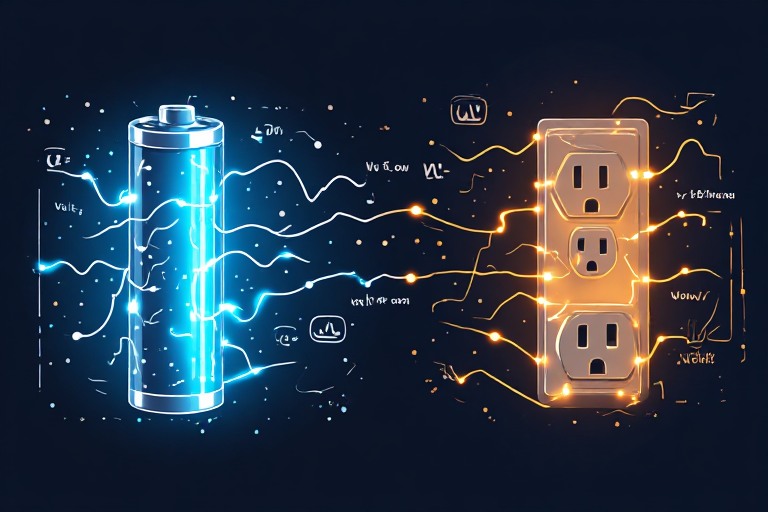
Direct current (DC) is electricity that flows in one consistent direction. Batteries are a familiar example of a DC power source. The electricity from a battery travels through a circuit from one side to the other, allowing devices such as flashlights, toys, and portable electronics to operate.
Think of DC like a one-way road: the traffic keeps moving in the same direction.
What Is Alternating Current?
Alternating current (AC) works differently. Instead of continuously flowing in one direction, the current periodically changes direction. The electricity supplied to homes and buildings is generally AC, making it suitable for powering appliances, lighting, computers, and many other household devices.
If DC is a one-way road, AC is more like a road where the traffic regularly changes direction. Fortunately, the electrical system has everything organized so your toaster doesn’t have to negotiate with your refrigerator.
Understanding Volts
Voltage, measured in volts (V), describes the electrical potential difference that pushes current through a circuit. A higher voltage can provide a stronger electrical push, although the actual current and power also depend on the rest of the circuit.
For example, a small battery may provide a few volts, while household electrical systems operate at much higher voltages.
Understanding Watts
Watts (W) measure electrical power the rate at which electrical energy is being used or transferred. In a simple DC circuit, power can be calculated using the formula watts = volts × amps.
Understanding the relationship between volts, amps, and watts makes it easier to understand electrical devices and their power requirements.
Why These Basics Matter
Knowing the difference between AC and DC, along with understanding volts and watts, provides a useful foundation for learning about electricity. These concepts appear everywhere, from phone chargers and batteries to household appliances and electrical systems.
Once you understand these fundamentals, electricity becomes a little less mysterious and hopefully a lot less intimidating.